

close
Choose Your Site
Global
Social Media
Views: 0 Author: Site Editor Publish Time: 2026-03-11 Origin: Site


When comparing manual and automated coating systems, it is important to distinguish roller coating from spray coating. These are not the same process. Spray coating relies on atomization and overspray control, while roller coating depends on the controlled transfer of coating through the surface geometry of the roller itself. If your process is based on a coating roller or engraved metering roller, then the core technical focus should remain on the anilox roller, its cell geometry, transfer stability, line speed, and coating uniformity. The right choice between manual and automated operation depends on your production scale, substrate, coating characteristics, and the consistency level your application requires.
In short, if you need repeatable coating weight, higher line speed, and tighter process control, an automated anilox-roller-based system is usually the better fit. If you handle small batches, frequent product changes, or trial work, a manually adjusted roller coating setup may offer greater flexibility. Your decision will directly affect coating quality, production efficiency, and operating cost.
This article discusses roller coating based on anilox or engraved rollers, not spray coating. The coating is transferred by the roller surface, not by atomized spray.
Automated anilox roller systems are better suited to high-speed, repeatable production where stable coating weight and consistent surface quality are required.
Manually adjusted roller coating systems are more suitable for sampling, small-batch jobs, and processes that require frequent parameter changes.
Roller surface design, cell geometry, material compatibility, and line control all influence the final coating result.
The correct roller system improves coating uniformity, reduces waste, and supports more stable production.
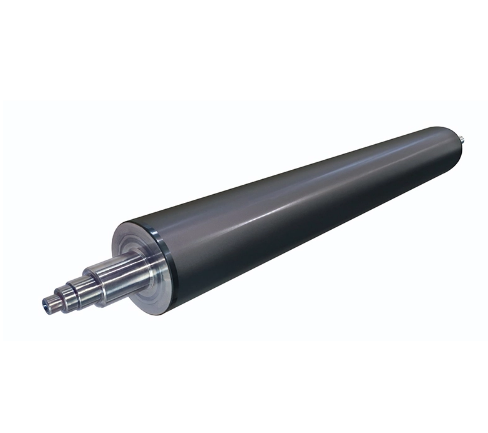
To choose between manual and automated operation, you first need to understand how an anilox roller functions in a roller coating process. In this system, the roller meters and transfers a controlled amount of coating onto the substrate. The coating volume depends on parameters such as engraved cell geometry, line pressure, roller speed, viscosity, and the relationship between the metering roller and the backing or application roller.
In a manually adjusted roller coating setup, the operator changes pressure, speed, and other process parameters by hand. This allows fast response during small runs or development work. In an automated system, these parameters are controlled by motors, sensors, and programmable logic. The result is more repeatable coating transfer and better control over coating weight during continuous production.
Here is a table showing the main operational differences:
Feature | Manual Roller Coating | Automated Roller Coating |
|---|---|---|
Ideal Use | Low-volume, trial, or custom operations | High-speed, repeatable production |
Advantages | High flexibility, easier setup changes, lower initial investment | Stable coating weight, higher throughput, reduced operator dependence |
Limitations | More labor-intensive, greater variation between runs | Higher upfront cost, more complex integration and maintenance |
Best For | Small workshops, development lines, frequent product changeovers | Mass production lines, battery, packaging, electronics, and industrial coating applications |
Shangyun Ceramic offers both general-purpose and high-precision roller solutions. For flexible applications, you can consider a Multi-Use General Coating Roller. For high-speed and higher-uniformity lines, a Laser-Engraved High-Precision Coating Roller is more suitable.
In roller coating, precision depends on how accurately the anilox or engraved roller meters the coating. Automated systems maintain more stable roller speed, nip pressure, and coating feed conditions, which helps keep coating thickness and laydown more uniform over long runs. This is one of the main reasons automated roller coating systems are widely used in industrial production.
Manual systems can still deliver acceptable results, especially for small jobs, but the final coating quality depends more heavily on operator skill and process discipline. Small differences in speed, pressure, or coating supply can create visible variation in thickness or appearance.
Automated lines use high-precision rollers to deliver more repeatable results. In particular, laser-engraved or micro-gravure rollers help maintain controlled transfer and support tighter coating tolerances across the web.
Tip: If your priority is stable coating weight, repeatable transfer, and higher production speed, an automated anilox-roller-based system is usually the stronger choice. If your priority is flexibility and frequent adjustment, a manual roller coating setup may be more practical.
Surface uniformity is one of the most important evaluation criteria in roller coating. Because the coating is transferred mechanically through the roller surface, uniformity depends on engraved pattern consistency, roller roundness, dynamic balance, viscosity control, and line stability.
In manual systems, coating thickness may vary when operator adjustments are inconsistent or when process conditions shift during the run. In automated systems, closed-loop control helps maintain a more stable coating film, especially on large-volume jobs or longer production runs.
Here is a quick comparison of finish quality between manual and automated roller coating methods:
Aspect | Manual Roller Coating | Automated Roller Coating |
|---|---|---|
Efficiency | Lower due to manual parameter adjustment | Higher with stable automated control |
Coating Quality | More affected by operator technique | More consistent and uniform across runs |
Material Use | Greater variability and higher risk of excess coating | Better control of coating volume and reduced waste |
Production Integration | More suitable for standalone or low-speed processes | Easier to integrate into continuous production lines |
Automated roller coating systems provide more stable coating results from one batch to the next. This helps reduce scrap and improves downstream consistency.
Selecting the right anilox roller also means considering the substrate and coating material. Different engraved structures and roller materials respond differently to coating viscosity, abrasive fillers, solvents, and line pressure. Ceramic-coated rollers are often chosen where wear resistance, chemical resistance, and dimensional stability are critical.
High hardness supports longer service life.
Wear resistance helps maintain stable transfer performance.
Thermal resistance supports operation under elevated process temperatures.
Corrosion resistance helps protect against aggressive coating chemistries.
A controlled surface finish supports more uniform coating transfer.
Proper roller design improves compatibility with films, foils, paper, nonwovens, metals, and other substrates.
When the roller surface, cell structure, and process settings are properly matched to the coating system, the line can achieve better uniformity and more reliable results on ceramics, metals, plastics, paper, and flexible materials.
If your objective is higher throughput and stable continuous production, automated roller coating systems offer clear advantages. Because the anilox roller meters coating continuously and the line parameters are controlled automatically, the process can run at higher speed with less variation than a manually adjusted setup.
In general, automated roller coating lines provide:
Coating Method | Typical Production Characteristic |
|---|---|
Manual Roller Coating | Better for small-batch, flexible, lower-speed production |
Automated Roller Coating | Better for continuous, repeatable, higher-speed production |
Automated systems also improve production efficiency by reducing manual intervention. Fewer operators are needed to maintain steady output, and process variability is reduced through better mechanical and electronic control. In addition, more stable metering typically lowers coating waste and reduces rework caused by uneven laydown.
Aspect | Manual Roller Coating | Automated Roller Coating |
|---|---|---|
Metering Stability | Depends strongly on operator adjustment | More stable under closed-loop control |
Rework Requirement | More likely if coating variation occurs | Lower when parameters remain stable |
Production Efficiency | Lower, especially on long runs | Higher, especially for continuous production |
Labour Costs | Higher due to greater operator involvement | Lower per unit output after system implementation |
If your application requires large volumes and stable quality, automated anilox-roller-based coating gives you the process consistency needed to keep production moving.
Manual roller coating systems remain valuable for special projects. They are easier to set up for sample development, low-volume manufacturing, or jobs that require frequent parameter changes. Small shops and early-stage production teams often prefer manual systems because they require less initial investment and are easier to adjust during process development.
Advantages of Manual Roller Coating |
|---|
Lower initial investment and operating complexity |
Suitable for small workshops and startups |
Easier setup changes for small-batch customization |
Practical for trials, sampling, and process tuning |
Manual coating lets you change speed, pressure, and setup conditions for each project. This is useful when different substrates or coating formulas require frequent adjustment. It is especially practical when production speed is not the main priority and process flexibility matters more.
Tip: Choose automated roller coating for long runs, higher throughput, and repeatable quality. Choose manual roller coating when you need flexibility, sampling capability, or lower initial investment.
Cost evaluation should include both the initial purchase price and long-term operating cost. Manual roller coating systems usually require less capital investment. They can be installed with relatively simple mechanical components, which makes them attractive for smaller manufacturers or trial lines.
Automated roller coating lines require higher upfront investment because they involve drives, controls, sensors, and system integration. However, over time they often lower cost per unit by improving throughput, reducing waste, and supporting more stable process control.
Ongoing costs include energy, maintenance, replacement parts, and process downtime. Manual systems are mechanically simpler, but they may generate higher labor cost and more process variation. Automated systems require more technical support, but they are generally more economical for larger-scale production.
Labor is a major part of total cost. Manual roller coating processes usually require more direct operator involvement for setup, adjustment, monitoring, and correction. Automated systems reduce manual input and make the process less dependent on operator technique.
Here is a simple comparison:
Labor Requirement | Relative Labor Cost |
|---|---|
Lower labor demand | Lower |
Higher labor demand | Higher |
Maintenance also matters. Automated roller coating lines include more control components and therefore require more structured maintenance planning. But for high-volume production, this added complexity is often justified by better line stability and reduced downtime per unit output.
Tip: If your business is scaling toward larger and more repeatable production, automated roller coating usually offers better long-term economics despite higher initial investment.
You need to choose the right roller configuration for your specific process. Because this article focuses on anilox-roller-based roller coating, the key questions are not about spray atomization but about roller metering, engraved structure, substrate behavior, and coating transfer stability.
Key factors to evaluate include:
Coating Type: Viscosity, solids content, abrasiveness, and solvent system all affect roller selection.
Cell Geometry: The engraved pattern influences pickup, release, and final coating weight.
Required Coating Weight: The target dry or wet film thickness determines the appropriate roller specification.
Substrate Type: Film, foil, paper, fabric, metal, and composite materials respond differently during roller transfer.
Machine Specifications: Roller dimensions, operating speed, temperature, and line configuration must all be matched correctly.
Roller Balancing: High-speed lines require tight balancing and strong dimensional stability.
Surface Material: Ceramic, chrome, or other surface systems should be selected based on wear and chemical resistance.
Corrosion Resistance: If the coating chemistry is aggressive, corrosion-resistant structures and coatings become critical.
You also need to choose between manual adjustment and automated control. Manual systems offer more flexibility for small jobs. Automated systems help you achieve more stable coating transfer and higher output. For broad application needs, Shangyun Ceramic’s Multi-Use General Coating Roller is suitable for many tasks. For faster and more uniform production, the Laser-Engraved High-Precision Coating Roller is a stronger option.
Tip: Always evaluate the coating formula, substrate, target film thickness, and machine conditions before finalizing the anilox roller specification.
Many OEM and factory buyers need custom roller solutions. Shangyun Ceramic offers custom engineering support so you can match the roller to your process conditions and machine requirements.
To select the right roller, it helps to provide:
Core diameter, finished diameter, and face length.
Process temperature and exposure to chemicals or solvents.
Machine speed, target coating weight, and hardness requirements.
Core material options such as steel, aluminum, or stainless steel.
Substrate type and coating characteristics.
Shangyun Ceramic’s engineering team can help define the correct surface finish, roller material, engraving method, and dynamic balance standard. Custom rollers reduce process mismatch and help maintain more stable coating performance. You can choose from mirror-matte finishes, multi-mesh metal micro-gravure rollers, and lithium-battery ceramic micro-gravure rollers depending on the application.
Note: Customization is especially important for anilox rollers because small specification differences can significantly affect transfer behavior and coating stability.
Shangyun Ceramic provides technical communication and global delivery support, helping customers select suitable roller solutions for both manual and automated coating lines.
Customization Options | Benefits |
|---|---|
Custom dimensions | Matches machine layout and installation requirements |
Surface finishes and engravings | Supports coating transfer and uniformity targets |
Material choices | Improves resistance to process conditions |
Engineering support | Reduces process risk and improves line reliability |
With the right technical support, both manual and automated roller coating lines can be optimized around the correct anilox roller specification.
Manual roller coating systems can be used in many small-scale or development-stage applications. Small workshops often use manually adjusted roller systems for custom coating work, sampling, pilot runs, and product trials. Because the operator can directly adjust pressure and speed, manual systems are useful when the process needs frequent changes.
Manual setups are also practical when coating small batches of specialty materials or when optimizing process windows before scaling to full production. They are often used in laboratories, development centers, and small custom production environments.
Tip: Manual roller coating is best when you need flexibility, frequent setup changes, or closer hands-on process tuning.
Large factories use automated anilox-roller-based coating systems when they need higher throughput and stable product quality. These systems are widely used where coating weight uniformity, repeatability, and continuous production matter most.
Here is a summary of key benefits:
Benefit | Description |
|---|---|
High Coating Uniformity | More even and repeatable coating laydown across the substrate |
High Production Throughput | Suitable for continuous operation and larger production volumes |
Better Material Control | Stable metering helps reduce over-application and waste |
Process Versatility | Compatible with many coating materials and substrate types |
Easier Line Integration | Works well with continuous upstream and downstream equipment |
Consistent Quality | Automatic settings and feedback controls reduce run-to-run variation |
Automated roller coating lines are especially effective for battery materials, flexible packaging, electronics, films, functional coatings, and other large-scale industrial applications.
Note: Automated roller coating is the preferred approach when your goal is high-volume production with stable coating transfer, controlled coating weight, and lower variation.
The most important correction is this: do not confuse roller coating with spray coating. This article is about anilox or engraved coating rollers, where the roller meters and transfers the coating. It is not about atomized spray application. Once that distinction is clear, the choice becomes more straightforward: manual roller coating is better for small-scale flexibility, while automated roller coating is better for high-speed consistency and larger-scale production.
Factor | Manual Roller Coating | Automated Roller Coating |
|---|---|---|
Cost | Lower initial investment | Higher initial investment |
Precision | Lower and more operator-dependent | Higher and more repeatable |
Speed | Slower | Faster |
If you need expert advice, share your substrate type, coating system, target film thickness, machine size, and production speed with Shangyun Ceramic. Their team can help you select the most suitable anilox roller solution for your process.
Roller coating transfers material through the surface of a roller, usually an engraved or anilox roller, to achieve controlled coating weight. Spray coating uses atomized droplets projected onto the substrate. The process principles, equipment, and control points are different.
Because the technical logic is different. If the article is about an anilox roller, the core topics should be metering, cell geometry, viscosity control, coating transfer, and line stability. Spray-related topics such as atomization, overspray, and spray gun efficiency do not accurately describe how an anilox roller works.
Shangyun Ceramic offers coating roller solutions designed for stable transfer, high wear resistance, and process customization. These rollers can be matched to different substrates, coating systems, and production requirements. Custom dimensions and engineering support also help improve process fit.
Anilox rollers influence how consistently coating is metered and transferred at line speed. A properly specified roller helps maintain stable coating weight and reduces process variation, which supports more efficient production and fewer interruptions.
Lead times depend on project size, customization level, roller specification, engraving method, and machine compatibility requirements. Standard rollers are faster to deliver, while custom rollers may require more time for engineering review and production.
In automated systems, a well-matched anilox roller helps stabilize production and reduces the need for constant operator adjustment, which can lower labor input per unit output. In manual systems, more operator attention is usually required to maintain coating consistency.


