

close
Choose Your Site
Global
Social Media
Views: 0 Author: Site Editor Publish Time: 2026-02-25 Origin: Site


The manufacturing landscape is undergoing a seismic shift. By 2026, the global demand for electric vehicle batteries, high-performance electronics, and advanced flexible packaging will render "standard application" methods obsolete. The new benchmark is micron-level precision, where every layer of material contributes directly to product performance and efficiency. This evolution presents a significant engineering challenge. Traditional coating rollers, once the workhorses of production lines, are now struggling to meet the incredibly tight tolerances required by next-generation substrates and aggressive chemical formulations. Their limitations lead to higher scrap rates, inconsistent quality, and a ceiling on production speed. This guide navigates the key technical innovations in coating roller design, providing a strategic roadmap to optimize Total Cost of Ownership (TCO) and unlock new levels of manufacturing throughput.
Micro-Gravure Dominance: The Lithium-battery ceramic micro-gravure roller has become the industry standard for thin-film applications requiring ±1% coating uniformity.
Digital Integration: Industry 4.0 is no longer optional; real-time monitoring of roll gap and speed ratios is essential for reducing scrap rates.
Sustainability as ROI: Transitioning to UV/EB curing and high-precision rollers reduces energy consumption by up to 40% and VOC emissions significantly.
Laser-Engraving Precision: Laser-engraved high-precision coating rollers are replacing mechanical engraving to achieve complex cell geometries and improved release characteristics.
Spray-Coating Direction: For thermally sprayed ceramic layers, the engineering trend is not to pursue "thinner at all costs," but to achieve higher coating density and an appropriate thickness window to balance wear resistance, corrosion resistance, and long-term stability under acidic slurry exposure.
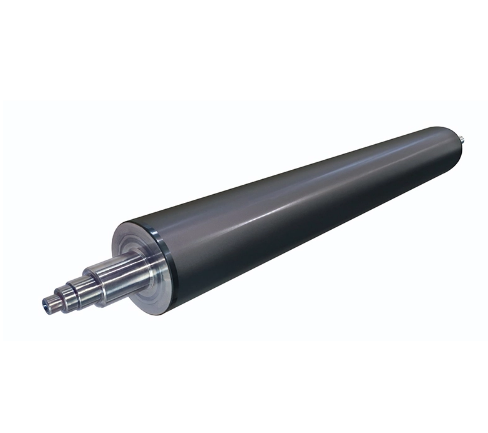
The exponential growth of the electric vehicle market has placed immense pressure on battery manufacturers to increase energy density and production speed. This is where the specialized micro-gravure roller has become indispensable. It is engineered specifically to handle the unique challenges of battery component manufacturing.
Battery slurries, containing abrasive active materials like lithium cobalt oxide or graphite, are notoriously aggressive. In many process conditions, they may also contain acidic or otherwise corrosive chemical components that accelerate surface degradation. These media can quickly wear down standard steel rollers, leading to inconsistent coating and costly line stoppages. Ceramic-coated rollers provide a robust solution. The ceramic layer offers exceptional hardness and superior chemical resistance, ensuring the roller's engraved surface integrity is maintained over millions of rotations. This durability is critical for applying a perfectly uniform layer of anode or cathode material, a key factor in maximizing a battery's energy storage capacity and lifespan.
Traditional gravure cells, often hexagonal or quadrangular, can sometimes struggle with the high-viscosity, particle-heavy slurries used in battery production. A major trend for 2026 is the adoption of innovative "open-cell" or channel-like structures. These elongated and interconnected cell geometries facilitate a much higher and more consistent transfer of the slurry from the roller to the substrate. This design significantly minimizes the risk of "clogging" or "packing," where slurry particles become trapped in the cells. By ensuring a smoother release, manufacturers can run their lines at higher speeds without sacrificing coating quality.
There is an inherent trade-off among wear resistance, corrosion resistance, thermal stability, and coating precision. In the past, some design strategies emphasized making ceramic layers as thin as possible to improve dimensional control and heat transfer. However, for thermally sprayed ceramic coatings used in demanding battery applications, the 2026 engineering direction is not to pursue "thinner" indiscriminately. Instead, manufacturers are prioritizing high-density ceramic structures and an appropriate coating thickness that can withstand both mechanical abrasion and chemical attack.
Advanced plasma-sprayed ceramic layers are becoming the preferred standard because this application method creates a denser, more homogeneous coating with superior bonding to the roller's steel base. This high-density microstructure reduces porosity and slows the penetration of corrosive media. Critically, an excessively thin ceramic layer is more vulnerable to being penetrated by acidic slurry, which can accelerate coating failure, expose the substrate, and shorten roller life. For that reason, the optimal design is a well-controlled thickness range combined with high density and strong adhesion, delivering the best balance of longevity, corrosion resistance, and high-speed precision.
The primary use cases for the Lithium-battery ceramic micro-gravure roller are in two critical stages of battery cell production:
Separator Coating: Applying a thin, uniform ceramic or polymer layer to the separator film. This enhances the battery's safety and thermal stability.
Anode/Cathode Active Material Application: Precisely coating copper (anode) or aluminum (cathode) foils with the active slurry. The uniformity of this layer directly impacts the battery's performance and cycle life.
As tolerance requirements shrink to the sub-micron level, the method used to create the roller's surface pattern becomes the most critical variable. Laser engraving has emerged as the dominant technology, leaving older mechanical and even electronic methods behind due to its unparalleled accuracy and flexibility.
Mechanical engraving relies on a diamond stylus physically displacing metal to create cells. This process is limited by the stylus's physical shape and is prone to wear, leading to inconsistencies across the roller's surface and from one roller to the next. Laser engraving, by contrast, is a non-contact process. It uses a highly focused beam of energy to vaporize material, creating cells with exceptional clarity and consistency. This method can achieve sub-micron tolerances in cell depth, wall thickness, and volume, ensuring that every part of the roller delivers the exact same amount of coating material. This level of precision is simply unattainable with mechanical techniques.
Modern coating lines are complex systems. Precision rollers are designed to be a key control node, allowing operators to fine-tune performance through advanced engineering features.
With laser engraving, it's possible to create highly customized surface patterns and textures beyond simple cell shapes. Engineers can now design micro-corrugations and specific textures on the "land" areas between cells. These patterns are engineered to manage the fluid dynamics of the coating at the nip point—the precise point of contact between the roller, substrate, and backing roll. Proper fluid management prevents air entrainment and ensures a smooth, defect-free coating laydown, even at extreme speeds.
The ability to control shear forces is vital, especially when working with coatings that contain suspended particles. Advanced Human-Machine Interfaces (HMIs) now allow operators to precisely control the differential speed ratio—the difference in surface speed between the coating roller and the moving substrate. By adjusting this ratio, you can manipulate the shear forces applied to the fluid as it transfers. This control is crucial for orienting particles correctly within the coating or ensuring a homogenous distribution, directly impacting the final product's functional properties.
A perfectly engraved surface is useless if the roller itself deforms during operation. At high RPMs, centrifugal forces can cause a roller to flex or bow, especially in the center. This deformation completely destroys coating uniformity. To combat this, the trend is a shift toward specialized steel alloys and hybrid composite materials for the roller base. These materials offer a higher stiffness-to-weight ratio, minimizing centrifugal deformation and ensuring the roller maintains its precise geometry from a standstill to full production speed.
The integration of digital technology into manufacturing, known as Industry 4.0, is transforming coating operations from a reactive art into a predictive science. Smart coating systems built around intelligent rollers are at the forefront of this revolution, delivering unprecedented levels of control and efficiency.
The concept of "run to failure" is a relic of the past. Modern coating roller assemblies are being integrated with sensors to provide a continuous stream of health data. These sensors can detect subtle changes in vibration, temperature, and wear before they escalate into problems that impact coating quality. This data feeds into predictive maintenance software, which can alert technicians that a roller is nearing the end of its optimal life or that a bearing requires service. This proactive approach prevents unexpected downtime and reduces scrap caused by degraded components.
One of the most powerful Industry 4.0 tools is the digital twin. This is a virtual model of the physical coating process, including the roller, the substrate, and the fluid properties. Before a single drop of expensive material is used on the production line, engineers can run simulations to test different roller cell geometries, machine speeds, and fluid viscosities. This virtual experimentation allows for the optimization of the process, predicting potential defects and identifying the ideal parameters. By using digital twins, manufacturers can reduce physical setup waste by an estimated 20-30%.
Maintaining a consistent gap between the application roller and the backing roller is critical for uniform coating thickness. However, substrates can have slight variations in their thickness. Real-time, closed-loop feedback systems solve this problem. Sensors continuously measure the substrate's thickness as it enters the coating station and feed this data to the machine's controller. The system then automatically makes micro-adjustments to the roll gap, compensating for any variations and ensuring the final coated product meets exact specifications from start to finish.
Addressing labor shortages and the need for absolute precision, collaborative robots (cobots) are playing an increasing role in coating operations. Cobots can be programmed to perform highly repetitive and delicate tasks with perfect consistency. Their primary roles include executing precise roller changeovers to minimize downtime and performing meticulous cleaning routines on the rollers, doctor blades, and ink pans. This mitigates the risk of human error and contamination, leading to higher overall quality and operational efficiency.
Investing in precision roller technology is not merely a capital expenditure; it is a strategic investment in operational efficiency, sustainability, and long-term profitability. The business case becomes clear when you analyze the Total Cost of Ownership beyond the initial purchase price.
Modern coating processes powered by precision rollers are significantly more energy-efficient than older, less controlled methods. Compared to legacy systems like hammer-mills or low-tech spray applicators, the targeted transfer of a precision roller can lead to substantial energy savings. When paired with energy-efficient curing technologies like UV or Electron Beam (EB), the overall reduction in energy consumption can be significant.
| Technology | Typical Energy Savings | Key Benefit |
|---|---|---|
| Precision Roller Coating | 15-40% (vs. Hammer-mill/Spray) | Direct, efficient material transfer reduces mechanical and thermal energy waste. |
| UV/EB Curing Integration | Up to 75% (vs. Thermal Ovens) | Instant curing eliminates the need for long, energy-intensive thermal drying tunnels. |
| Legacy Spray/Flood Systems | Baseline (0% Savings) | High energy use from pumps, air handlers, and thermal dryers. |
The principle behind precision rollers is applying exactly the right amount of material exactly where it is needed. This "precision transfer" technology drastically reduces waste compared to less accurate methods. In spray coating, a significant percentage of material becomes overspray. In flood coating, excess material must be scraped off and recovered. With a high-quality roller, the cell volume is precisely engineered to carry and release a specific amount of fluid, minimizing slurry waste and directly improving the bottom line.
A higher initial capital expenditure for a laser-engraved high-precision coating roller can be daunting. However, a TCO analysis often reveals a rapid return on investment. The evaluation framework should consider:
Reduced Scrap Rates: Higher consistency means fewer rejected products.
Increased Throughput: The ability to run lines faster without sacrificing quality.
Lower Material Costs: Minimized waste from precise application.
Reduced Energy Consumption: Lower utility bills from more efficient operation.
Extended Maintenance Intervals: Durable materials and coatings mean rollers last longer between reconditioning cycles.
Environmental regulations, particularly concerning Volatile Organic Compound (VOC) emissions, are becoming stricter globally. Precision coating systems are inherently better equipped to meet these 2026 standards. Their high transfer efficiency means less solvent is released into the atmosphere. Furthermore, they are often designed to be compatible with emerging water-based and 100% solids coatings, future-proofing the production line against upcoming environmental mandates.
Choosing a roller supplier is no longer a simple procurement decision; it is a strategic partnership. Your vendor's capabilities will directly impact your production potential. A robust evaluation framework is essential to select a partner who can meet the challenges of 2026 and beyond.
Begin by assessing a potential vendor’s core engineering and manufacturing capabilities. Your audit should seek answers to several key questions:
Can they demonstrate the ability to achieve custom cell volumes and complex geometries tailored to your specific fluid and substrate?
What is their expertise in applying specialized functional coatings to the roller surface, such as anti-static, easy-release, or even self-healing nanocoatings?
What quality control processes do they use to verify cell volume and surface finish across the entire face of the roller? Ask for interferometry reports or other QC documentation.
A roller is a critical component that requires periodic service. Evaluate the vendor's ability to support your operations long-term. Consider their regional footprint for roller re-conditioning and laser re-engraving services. A partner with local or regional support can dramatically reduce logistics costs and turnaround times, minimizing your line's downtime. Inquire about their capacity to scale with you as your production demands grow.
As you narrow down your list of potential partners, use a final checklist to make your decision. A top-tier supplier for 2026 should be able to answer "yes" to these questions:
Does the vendor offer simulation-backed performance guarantees? Can they use digital twin technology to model and predict how their roller will perform with your specific application before you place an order?
Can they integrate with existing Industry 4.0 ERP systems? Can their smart rollers provide data that feeds directly into your plant's manufacturing execution system (MES) for holistic process control?
What is the documented lifespan of their ceramic surfaces under high-speed conditions? Ask for case studies or performance data from clients in similar industries to verify durability claims.
In the high-stakes manufacturing environment of 2026, precision roller technology is the silent engine driving profitability and competitive advantage. The shift towards laser-engraved, ceramic-coated, and digitally-integrated rollers is not a trend—it is a fundamental requirement for achieving the quality, speed, and efficiency demanded by modern industries. At the same time, for thermally sprayed ceramic systems, the path forward is not blind pursuit of minimum coating thickness, but engineering the right combination of high density, strong adhesion, and appropriate thickness to withstand abrasion and corrosive slurry environments. By mastering these advancements, manufacturers can drastically reduce waste, lower energy consumption, and produce higher-performing products.
The time has come to move beyond treating rollers as a commodity. The future lies in forming strategic engineering partnerships with suppliers who can provide customized solutions, advanced technical support, and a clear path to integrating with the smart factories of tomorrow. Future-proof your coating lines by investing in precision technology today.
A: The lifespan varies significantly based on the abrasiveness of the battery slurry, its chemical corrosiveness, and the maintenance protocols. With highly abrasive materials, acidic slurry systems, and continuous 24/7 operation, a roller might require reconditioning every 3-6 months. However, with proper and regular cleaning cycles to prevent slurry packing, optimized coating density, and a ceramic layer designed with an appropriate thickness rather than an excessively thin build, a high-quality plasma-sprayed ceramic roller can last well over a year. Consistent monitoring for wear and corrosion is crucial.
A: Laser engraving creates cells with far greater consistency in shape, depth, and volume than electronic engraving. The non-contact process eliminates tool wear, ensuring the first cell is identical to the last. This eliminates subtle variations that cause "ghosting" or pattern repeats in the coating. The result is a more uniform fluid transfer across the entire substrate, which is critical for high-performance applications like battery foils and optical films.
A: Yes, in most cases, existing lines can be retrofitted. However, it's often more than a simple drop-in replacement. A successful retrofit may require mechanical adjustments to the roller mountings to accommodate new dimensions. More importantly, it may necessitate upgrades to the machine's drive controls and HMI/PLC system to take full advantage of features like precise differential speed control and to integrate data from new sensors.
A: The primary return on investment (ROI) drivers are scrap reduction, energy savings, increased throughput, and longer service life under harsh chemical environments. Precision application minimizes material waste, directly lowering operational costs. Running lines faster without defects increases output and profitability. In addition, ceramic systems engineered with high density and appropriate thickness can better resist acidic slurry penetration, reducing premature failure and maintenance frequency. Finally, the improved energy efficiency of the rollers and compatibility with modern curing systems like UV/EB can significantly reduce utility expenses, contributing to a faster payback period on the initial investment.


