

close
Choose Your Site
Global
Social Media
Views: 0 Author: Site Editor Publish Time: 2026-05-29 Origin: Site


Saving a few dollars on an applicator tool often ruins hundreds of dollars worth of premium finishes. Many contractors experience shedding, severe stippling, or outright core delamination mid-project. While the base price of a coating roller seems negligible, hidden expenses quickly escalate. You face wasted material, extensive rework, and lost labor hours when cheap tools fail. Buyers must align tool specifications directly against project risk levels and specific surface requirements. Understanding exact price tiers helps you make smarter purchasing decisions. We will explore average pricing across different grades to clarify your options. You will learn exactly what drives these costs and how to evaluate core construction effectively. We will also provide a clear decision framework to help you choose the right tool for your specific application. Making the right choice prevents costly project delays and guarantees a professional result every single time.
Standard Range: A reliable multi use general coating roller typically costs between $4 and $12 per sleeve, while industrial-grade or highly specialized rollers range from $15 to $35+.
Hidden Costs: Cheap rollers often lack solvent-resistant cores (phenolic), leading to structural failure when used with epoxies or polyurethanes.
ROI Factor: High-end covers (e.g., shed-free woven or specialized ceramic variants) pay for themselves by eliminating the labor required to pick lint out of a curing surface.
Core Decision Matrix: Price should be dictated by the coating’s chemical makeup, viscosity, and the desired surface finish, not just the upfront cost.
Buyers need immediate, verifiable pricing expectations before procuring supplies. Categorizing solutions based on market data clarifies exactly what you receive at each price point. Applicators should evaluate these tiers against their specific project demands. Choosing the wrong tier often compromises the final finish.
Tier 1: Budget & Disposable ($2 – $5 per sleeve)
These sleeves represent the absolute lowest entry point in the market. Manufacturers use untreated cardboard or basic plastics to form the internal core. They glue low-grade knit fabrics to this base. You should only use these products for low-risk, high-volume applications. They work acceptably for basic water-based primers or disposable one-off jobs. However, they possess severe limitations. The fabric sheds heavily during application. Furthermore, harsh solvents quickly dissolve the cheap adhesives, causing complete structural failure.
Tier 2: Professional / Standard Grade ($6 – $15 per sleeve)
This mid-range tier serves as the backbone for most commercial contractors. They feature high-density microfiber or tightly woven fabric blends. Manufacturers utilize thermal fusion to bond the fabric securely to sturdy plastic cores. This category includes the reliable multi use general coating roller, engineered to deliver consistent mil thickness. They hold significant material while minimizing lint transfer. You will find these covers ideal for standard commercial paints and moderate-viscosity epoxies.
Tier 3: Industrial & Specialty ($15 – $35+ per sleeve)
Industrial applications demand uncompromising performance and specialized features. These premium sleeves utilize rigid phenolic cores designed to withstand aggressive chemicals. Manufacturers engineer specific nap textures, such as specialized looping for anti-slip grit distribution. They also produce ultra-smooth application tools like a mirror-matte finish ceramic roller for exacting architectural specifications. You should reserve this tier for marine decks, roofing membranes, high-build epoxies, and flawless decorative topcoats.
Price Tier | Average Cost | Core Material | Best Use Case | Shedding Risk |
|---|---|---|---|---|
Budget & Disposable | $2 – $5 | Cardboard / Basic Plastic | Primers, Disposable Jobs | High |
Professional / Standard | $6 – $15 | Thermally Fused Plastic | Commercial Paint, Light Epoxies | Low to Medium |
Industrial & Specialty | $15 – $35+ | Phenolic / Advanced Composites | Marine, Heavy Mastics, Glass Finishes | Virtually Zero |
Understanding the features behind the price tag empowers buyers to make logical decisions. You pay for engineering tolerances, chemical resistance, and labor-saving designs. We break down the exact construction elements separating cheap tools from premium instruments.
The core serves as the structural foundation of the sleeve. Cheaper covers utilize basic adhesives to attach the fabric to cardboard tubes. When exposed to harsh solvents like xylene, MEK, or two-part epoxies, this glue rapidly degrades. The fabric detaches, and the core turns into mush mid-application. Premium sleeves eliminate this risk entirely. They employ thermally fused plastics or heavy-duty phenolic cores. Thermal fusion melts the fabric backing directly into the core, creating an inseparable bond. This process prevents the tool from unraveling, ensuring continuous operation on critical industrial jobs.
Material selection heavily influences both cost and surface quality. Manufacturers primarily offer knit or woven fabrics. Knit covers cost less to produce and hold substantial amounts of paint. However, their open loop structure makes them highly prone to shedding. Woven fabrics cost noticeably more. They hold slightly less material but offer a completely lint-free application. High-density foams and microfibers also increase manufacturing costs. These dense materials reduce air bubble entrapment, practically eliminating stippling on smooth surfaces. Superior fabric blends directly translate into reduced rework.
Precision manufacturing dictates how the applicator releases fluid onto a surface. Budget covers often suffer from uneven nap heights, causing inconsistent film builds. Higher-priced alternatives feature strict quality control regarding nap uniformity. More importantly, premium covers utilize beveled edges. Straight edges often deposit heavy lines of paint known as "fat edges" or tramlines. These ridges cure into hard lines requiring hours of intensive sanding to remove. Beveled edges naturally taper the paint release, drastically cutting down on corrective labor.
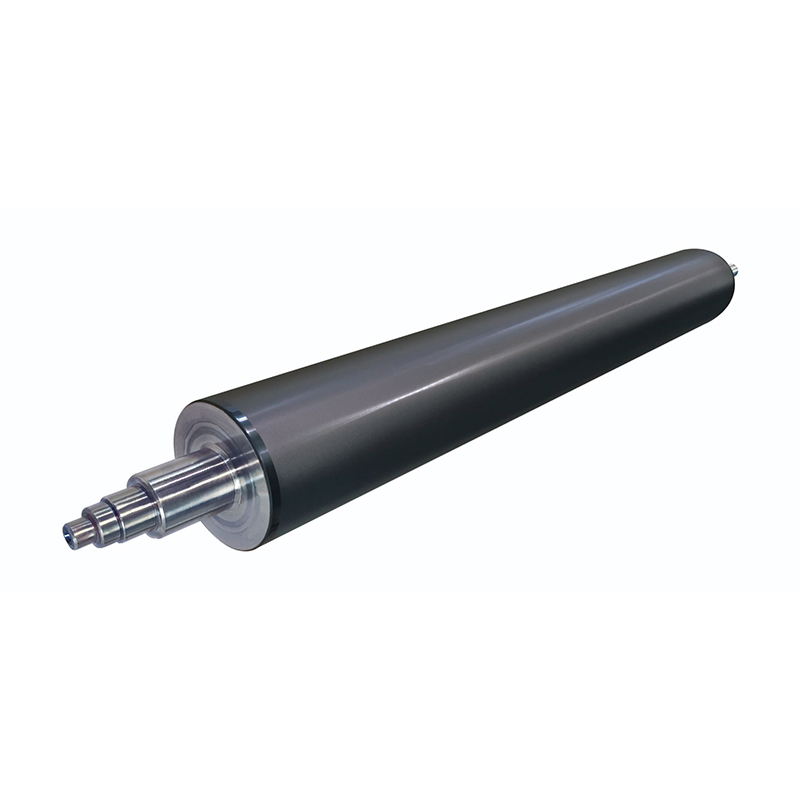
Many contractors view application tools as generic commodities. However, real-world implementation realities prove otherwise. Professional applicators consistently note the severe business risks associated with downgrading tool quality. We examine the practical differences between budget items and branded professional gear.
The "lint trap" reality presents a major challenge for applicators. Anecdotal evidence from seasoned professionals confirms a frustrating dynamic. Spending $5 less on a budget sleeve often results in two hours of extra labor. You spend that time painstakingly picking shed fibers out of a tacky marine or floor finish. A single stray fiber ruins the visual appeal of a high-gloss polyurethane. Removing it disrupts the wet edge, leaving permanent visual defects.
Another major issue involves the "spin versus slide" phenomenon. Budget covers frequently exhibit poor manufacturing tolerances. They fit loosely over standard frames. Instead of spinning smoothly across the substrate, the loose cover slides and skids. This sliding smears the fluid, creating uneven film builds and encouraging premature failure. Premium covers fit snugly, guaranteeing a smooth, consistent rolling action.
Brand reputation absolutely matters within the $10 to $20 tier. Established brands maintain strict quality control standards. They verify thermal fusion integrity and ensure uniform nap density. In commercial settings, this consistency acts as cheap insurance. You protect expensive material batches from contamination and ensure uniform curing across massive surface areas.
Certain application environments forgive minor tool imperfections. Others amplify them into catastrophic failures. Scaling down to a budget option constitutes a severe business risk in specialized scenarios. You must deploy engineered solutions to meet strict technical specifications.
Marine and anti-slip deck applications present unique physical challenges. These fluids often contain suspended rubberized particles or heavy aggregate grit. Standard fabric naps quickly mat down under the weight of these solids. They clog rapidly and fail to distribute the aggregate evenly. You require textured or looped covers costing between $15 and $25. The specialized loops suspend the grit, rolling it smoothly onto the deck for uniform traction.
Roofing and waterproofing sectors demand extreme durability. Applicators work with thick, heavy elastomeric mastics. Pushing these viscous materials requires substantial downward pressure. A standard plastic or cardboard core will instantly crush under this force. You must invest in heavy-duty, high-capacity tools designed specifically to handle extreme fluid dynamics without structural collapse.
Architectural and industrial topcoats demand visual perfection. High-end cabinetry, specialized industrial machinery, and decorative floors require glass-like aesthetics. Standard fabrics introduce unacceptable texture. Achieving flawless results demands ultra-low naps or highly specialized material combinations. You must select precision instruments to deliver these exact matte or mirror finishes without trapping micro-bubbles.
Navigating supplier catalogs requires a methodical approach. Buyers should avoid selecting tools based purely on visual similarity or upfront discounts. Follow this logical framework to match the tool’s specifications to your project’s reality.
Step 1: Identify the Coating Chemistry. Your fluid's chemical makeup dictates the core material you need. Water-based paints tolerate standard plastic cores easily. Oil-based products demand better thermal fusion. Harsh two-part solvents, like industrial epoxies, strictly require phenolic cores to prevent rapid delamination.
Step 2: Determine the Viscosity and Surface. Viscosity and substrate texture define your ideal nap length. Heavy viscosity fluids or rough exterior surfaces require a higher nap (typically 3/8" to 3/4"). Low viscosity fluids applied to smooth indoor surfaces demand a tight, low nap (1/4" to 3/8") to prevent stippling.
Step 3: Evaluate Reusability vs. Disposal. Calculate the true return on investment before buying. Consider the ROI of purchasing $12 multi-use tools and paying labor to clean them. Compare this against buying $4 disposable tools for harsh epoxies. If cleaning requires expensive, hazardous solvents, disposable tools offer superior economics.
You should always cross-reference your fluid's Technical Data Sheet (TDS) before finalizing a purchase. The manufacturer explicitly lists recommended application methods. Match these technical guidelines directly against our established price tiers to ensure perfect compatibility.
The average price of a reliable application tool sits comfortably around $8 to $15. Budget options exist for minor, low-risk tasks, while specialty variants push higher into the $35+ range. Attempting to force a cheap tool to perform an industrial task always backfires. You end up paying significantly more in wasted materials and corrective labor hours.
Treating your applicator as a precision instrument rather than a disposable commodity transforms your results. It remains the fastest, most effective way to ensure optimal fluid performance and maximum longevity. High-quality tools guarantee uniform thickness, prevent lint contamination, and survive harsh chemical exposure.
We encourage procurement managers and contractors to carefully review their upcoming project specifications. Browse dedicated supplier catalogs to find exact matches for your chemical requirements. Request bulk B2B pricing to bring down per-unit costs on premium gear, or contact a representative directly for expert specification assistance.
A: Yes, they easily justify their price through labor savings alone. Premium covers utilize shed-free woven fabrics, eliminating the tedious task of picking lint from tacky surfaces. They also feature solvent-resistant cores that prevent blowouts, protecting expensive materials from contamination and ruin.
A: It depends heavily on the fluid chemistry. You can easily wash and reuse them when applying water-based paints. However, cleaning them after applying two-part solvent-based epoxies requires harsh, expensive chemicals. In those specific industrial cases, treating them as single-use items often makes better economic sense.
A: The aggressive solvents in epoxies quickly dissolve the cheap glue holding the fabric to the core. The cover melts, sheds heavily, and slides off the frame. This failure creates uneven mil thickness, introduces massive lint contamination, and guarantees premature peeling of the finish.
A: Absolutely. Standard fabrics immediately mat down and clog when exposed to heavy aggregate grit. You need specialized looped covers. These specific textures suspend the rubberized or aluminum oxide particles, distributing them evenly across the deck to ensure consistent traction without clumping.


