

close
Choose Your Site
Global
Social Media
Views: 0 Author: Site Editor Publish Time: 2026-03-25 Origin: Site


In the world of flexographic printing, the technology for transferring ink has undergone a dramatic evolution. We've moved from heavy, cumbersome steel-core rollers to the lightweight, high-performance anilox sleeve system. At its core, the anilox roller is the heart of the printing press, meticulously metering a precise volume of ink onto the printing plate for consistent, high-quality results. This transition is not merely a trend; it's a strategic response to market demands. Modern high-speed presses from brands like Bobst, Gallus, and Windmöller & Hölscher (W&H) are increasingly built around sleeve-based architectures. This shift enables printers to meet the growing need for "just-in-time" delivery and short-run jobs with unprecedented speed and efficiency. This article will explore the top five benefits of making this critical switch, showing how it impacts everything from operator safety to your bottom line.
Operational Agility: Drastic reduction in changeover times (up to 90% faster than traditional rollers).
Safety & Ergonomics: Significant weight reduction (from 400 lbs to ~30 lbs) reduces workplace injuries and equipment strain.
Precision & Stability: Enhanced circularity and TIR (Total Indicator Reading) management through carbon fiber and advanced resin constructions.
Specialized Compatibility: Availability of machine-specific solutions like the Alloy-Based Gallus Ceramic Sleeve or Bobst-Specific W-H Ceramic Sleeve.
Long-Term ROI: Lower TCO through easier storage, reduced shipping costs for reconditioning, and minimized press downtime.
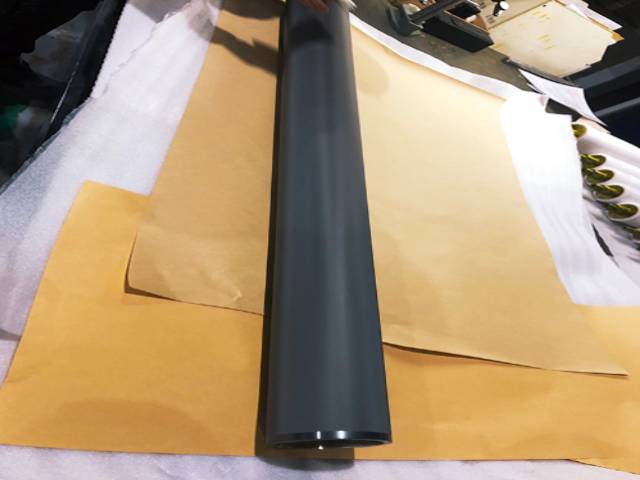
One of the most immediate and impactful benefits of anilox sleeves is the radical reduction in press downtime. Traditional anilox rollers require a complex and time-consuming changeover process. Operators often need to remove the entire drive side of the press, unbolt heavy bearing housings, and use a crane to lift the massive roller out. In contrast, sleeves offer a quick-change advantage. They are designed to slide on and off a fixed, hollow air mandrel in seconds. By applying compressed air, the mandrel expands slightly, allowing the operator to effortlessly position or remove the sleeve.
This efficiency directly supports the profitability of short-run jobs. In today's market, customer demand for smaller, more customized orders is rising. Anilox sleeves allow flexographic printing to compete directly with digital printing on this front. A job changeover that once took an hour or more can now be completed in minutes. This speed makes it economically viable to take on print runs as short as 500 meters, opening up new revenue streams that were previously impractical with traditional roller systems.
Anilox sleeves also unlock the full potential of advanced printing methodologies like Expanded Color Gamut (ECG). ECG, also known as fixed palette printing, uses a standardized set of inks (typically CMYK plus Orange, Green, and Violet) to reproduce a wide range of spot colors. By standardizing the ink set, printers can also standardize the anilox sleeves used for each color station. This synergy means fewer ink wash-ups and anilox swaps between jobs, further compounding the time savings. A press can run multiple consecutive jobs with minimal setup, maximizing uptime and throughput.
Workplace safety is a paramount concern in any manufacturing environment. The sheer weight of traditional steel anilox rollers presents a significant ergonomic challenge and safety risk. A typical steel roller can weigh between 350 and 400 pounds (158 to 181 kg), requiring specialized lifting equipment and often a multi-person team to handle. Any mishandling can lead to serious operator injury or damage to the expensive roller itself.
Anilox sleeves offer a revolutionary improvement in this area. A lightweight Ceramic-Coated Bobst Sleeve, by comparison, weighs only 25 to 35 pounds (11 to 16 kg). This dramatic weight reduction transforms the changeover process. It completely removes the need for overhead cranes or dedicated lift teams. A single operator can safely and easily carry, handle, and mount a sleeve, which streamlines the entire workflow and reduces the risk of back strains, crush injuries, and other common workplace accidents.
The benefits of lightweight construction extend beyond operator safety to the health of the printing press itself. The lower mass of an anilox sleeve results in significantly lower rotational inertia. This means the press motors and drive systems don't have to work as hard to start, stop, or change the speed of the print deck. The reduced stress on motors, gears, and bearings leads to less wear and tear over time, contributing to a longer overall machine lifespan and lower maintenance costs.
The construction of an anilox sleeve is a testament to modern material science, directly impacting print stability and quality, especially at high speeds. While older or lower-cost sleeves might use fiberglass, premium sleeves leverage carbon fiber for its exceptional properties.
Carbon fiber offers approximately three times the rigidity of steel at a fraction of the weight. This incredible stiffness is crucial for high-speed printing. It minimizes vibrations and virtually eliminates the phenomenon known as "anilox bounce," where the roller or sleeve starts to deflect and vibrate at high rotational speeds, causing print defects like chatter or banding. Fiberglass, being less rigid, is more susceptible to these issues. The stability provided by carbon fiber allows presses to run faster and produce cleaner, more consistent results.
In the world of precision printing, two key measurements are often discussed: Total Indicator Reading (TIR) and circularity.
TIR measures the total variation of a sleeve's surface as it is rotated, indicating how much it "wobbles" on its axis.
Circularity measures how perfectly round the sleeve is at any given cross-section.
While a low TIR is important, for a sleeve mounted on an air mandrel, circularity under pressure is arguably more critical. A sleeve with excellent circularity will maintain a consistent radius even when expanded by the air mandrel. This ensures a uniform nip pressure against the printing plate, which is essential for consistent ink transfer and high-end process work. A sleeve might have a slightly higher static TIR but perform flawlessly if its circularity is perfect.
The final piece of the quality puzzle is the ceramic surface and its engraving. Modern sleeves use multi-hit fiber optic lasers to create incredibly precise and repeatable cell geometries. The standard is a 60-degree hexagonal pattern, which provides excellent ink density and dot support. However, for challenging applications like high-viscosity UV inks, advanced geometries are needed. Extended or channeled engravings (often at 70-75 degrees) create more open pathways for ink to flow, preventing issues like UV ink spitting, where ink is forced out of the cells at high speeds, causing print defects.
The anilox sleeve is not a one-size-fits-all component. Leading manufacturers engineer sleeves with specific constructions and materials to optimize performance on major press brands like Gallus, Bobst, and W&H. This level of customization ensures perfect integration and addresses the unique demands of different printing applications.
For narrow-web label printing, where precision and thermal stability are key, solutions like the Alloy-Based Gallus Ceramic Sleeve are common. These sleeves often incorporate metal alloys in their construction to provide superior rigidity and, crucially, excellent heat dissipation. During high-speed runs, heat can build up and alter ink viscosity, leading to color shifts. The alloy base helps draw this heat away, maintaining a more stable printing condition for consistent, high-quality label production.
For wide-web flexible packaging presses, the technical nuances of the Bobst-Specific W-H Ceramic Sleeve come into play. These sleeves often feature a sophisticated "sandwich" construction designed for stability and durability. This layered design typically includes:
A fiberglass inner layer for a smooth fit on the mandrel.
A compressible foam layer that allows the sleeve to expand uniformly under air pressure.
A rigid core made of aluminum or carbon fiber for structural integrity.
The final ceramic coating and engraving.
This multi-layer approach ensures the sleeve is both lightweight and robust enough to handle the high speeds and wide formats of modern CI (Central Impression) presses.
Beyond the press brand, it is vital to know how to choose an anilox roller or sleeve base material based on your chemistry. The base material beneath the ceramic layer can be customized to resist degradation from aggressive solvents or high-pH cleaners.
Urethane: A common, lower-cost option suitable for many standard applications.
Resin: A more robust, value-added option offering superior chemical resistance. Choosing a resin base is a smart investment if you frequently use aggressive cleaning agents, as it prevents delamination and extends the sleeve's usable life.
While the initial investment in a sleeve system may seem significant, it delivers a superior Total Cost of Ownership (TCO) over its lifespan. This long-term value comes from reduced operational costs, lower reconditioning expenses, and maximized uptime.
The lifespan of a sleeve is not a fixed number; it depends on several factors:
Ceramic Porosity: Higher quality, less porous ceramic coatings are more durable and easier to clean, preventing premature wear.
Laser Engraving Depth: Deeper cell engravings will naturally have a longer life before wear reduces their ink volume capacity.
Cleaning Frequency and Method: Proper, regular cleaning prevents dried ink from damaging cell walls. Using pH-neutral cleaners and approved methods (like ultrasonic or laser cleaning) is crucial.
Handling and Storage: Avoiding physical damage from drops or improper storage is key.
With proper care, a high-quality anilox sleeve can last for many years, delivering millions of impressions.
Eventually, every anilox surface wears down. Sleeves, like rollers, can be reconditioned by stripping the old ceramic and engraving a new surface. However, there are limits. The aluminum cladding beneath the ceramic has a finite thickness. Each resurfacing process removes about 0.010 inches of this material. Once this cladding is worn too thin, the sleeve is considered "end-of-life" and cannot be safely reconditioned again. Understanding this wear limit helps in planning for long-term inventory and replacement budgets. Furthermore, the lightweight nature of sleeves significantly reduces the shipping costs associated with sending them out for reconditioning compared to a 400-pound roller.
Proper storage is essential for maximizing sleeve lifespan.
Best Practice: Store sleeves vertically in dedicated, padded racks. Storing them horizontally can cause them to sag and lose their circularity over time.
Corrosion Prevention: It is critical to maintain a pH safety window when cleaning. Most manufacturers recommend cleaners with a pH between 6.5 and 11.8. Highly acidic or alkaline chemicals can seep through microscopic pores in the ceramic and attack the sub-layer, causing the ceramic to delaminate and fail.
Making the switch to anilox sleeves is a strategic decision. While sleeves offer compelling advantages for many, traditional rollers still have their place. This guide helps you map your application to the right technology.
The choice between rollers and sleeves often comes down to your primary business model and press setup. Use the table below as a general guide.
| Criteria | Best Fit: Traditional Rollers | Best Fit: Anilox Sleeves |
|---|---|---|
| Primary Application | Wide-web printing, long-run jobs with few changeovers, heavy solid ink coverage. | Narrow-web labels, flexible packaging, frequent job changes, short-to-mid runs. |
| Key Priority | Maximum durability and rigidity for dedicated, long-running jobs. | Operational agility, speed of changeover, and operator safety. |
| Press Environment | Older presses without mandrel systems, or environments where changeovers are rare. | Modern presses with air mandrel systems designed for quick changes (or older presses retrofitted with mandrels). |
Once you've decided on sleeves, use these criteria to evaluate potential suppliers and products:
Mandrel Fit: The sleeve's inner diameter should be engineered for a precise interference fit on your press mandrel, typically around 0.005 inches smaller. This ensures the sleeve grips tightly when air is removed, preventing any slippage during rotation.
Engraving Geometry: Match the cell volume (BCM) and geometry to your primary applications. Discuss your typical substrates and ink systems (water-based, solvent, UV/LED) with your supplier to select the optimal engraving specifications. Don't settle for a generic recommendation.
Supplier Audit: Treat your anilox sleeve supplier as a partner. Ask critical questions to vet their expertise and quality control:
What are your guaranteed tolerances for TIR and circularity?
What is the hardness (HV rating) of your ceramic coating? (Higher is generally better).
Do you offer field support and press-side audits to help us optimize performance?
What is your warranty and reconditioning policy?
The transition to anilox sleeves is far more than a simple hardware upgrade; it is a strategic investment in operational excellence. By dramatically reducing downtime, enhancing workplace safety, and enabling superior print quality, sleeves provide a powerful competitive edge in a demanding market. They empower printers to be more agile, profitable, and responsive to customer needs for shorter runs and faster turnarounds.
To future-proof your operations, embracing lightweight materials and advanced channeled engraving technology is essential. These innovations will help you stay ahead of the industry's ever-increasing benchmarks for speed and quality. As a next step, we recommend auditing your current press downtime and changeover costs. Calculating the potential return on investment (ROI) will make the case for a sleeve-based transition clear and compelling.
A: The purpose remains the same as a traditional roller: it is the heart of the ink delivery system. The anilox surface is engraved with millions of microscopic cells that pick up a precise, metered volume of ink from an ink chamber and transfer it consistently to the printing plate. The sleeve format simply makes this critical component much lighter, safer, and faster to change.
A: Proper cleaning is vital. Use pH-neutral chemical cleaners (pH 6.5-11.8) for daily wash-ups. For deep cleaning, professionally recognized methods like ultrasonic baths, laser cleaning, or media blasting (e.g., sodium bicarbonate) are safe and effective. Avoid using abrasive brushes or highly acidic/alkaline chemicals, as these can damage the delicate cell walls or the underlying base layer.
A: Yes, in many cases. An older press can often be retrofitted to accept anilox sleeves. This typically involves replacing the existing roller journals with a specialized air mandrel system. It's a significant upgrade but can breathe new life into an older machine, providing the agility and safety benefits of modern sleeve technology. Consult with a press manufacturer or a specialized retrofitting company to assess feasibility.
A: When combined with sleeves, the primary advantages of flexographic printing are magnified. These include incredible speed, versatility across a wide range of substrates (from film to paperboard), and a very low cost-per-unit on mid-to-long runs. Sleeves specifically enhance these benefits by drastically cutting down non-productive setup time, making flexo highly competitive even on shorter runs.
A: The correct cell volume, measured in BCM (Billion Cubic Microns), depends on your specific application. As a general rule, finer detail and higher line screen printing require lower BCM, while heavy solids and coatings need higher BCM. Refer to the "How to choose an anilox roller" framework and work with your ink and anilox suppliers. They can provide recommendations based on your substrate, ink type, and desired print density.


